


How to Sing at Your Own Wedding: Tips, Songs, Preparation & Confidence

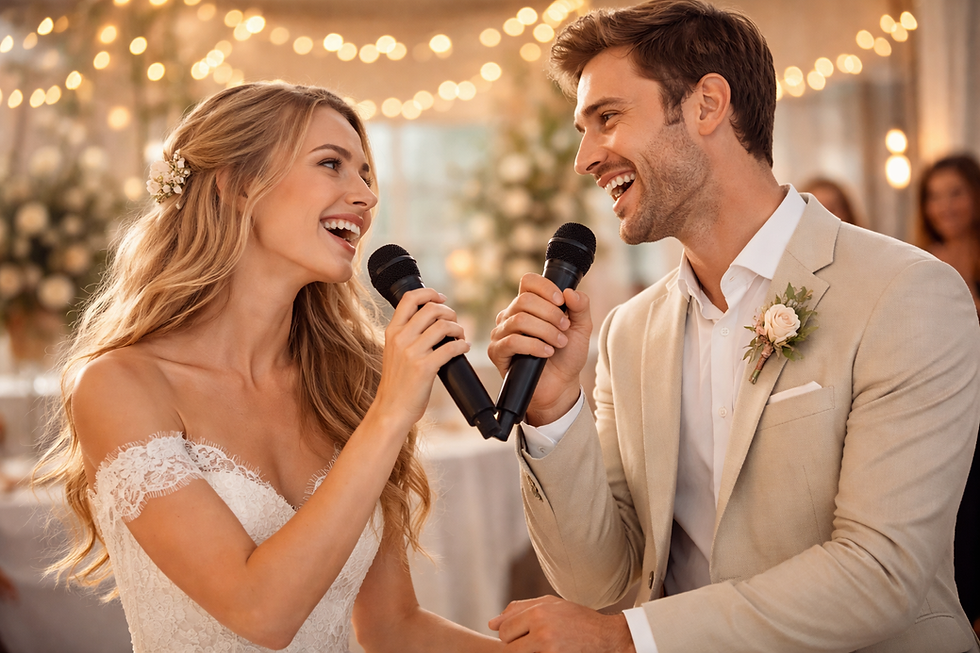
Singing a song at your own wedding is one of the most meaningful and unforgettable things you can do. It’s not just a performance—it’s a deeply personal expression of love, vulnerability, and connection. While many couples focus on décor, timelines, and logistics, choosing to sing brings something entirely different into the experience. It creates a moment that feels real, intimate, and uniquely yours.
At the same time, it’s completely normal to feel unsure about it. You might be wondering if your voice is “good enough,” or if you’ll be able to handle the pressure of singing in front of your guests. You may even be asking yourself how to sing better quickly enough to feel confident by the time your wedding day arrives.
The truth is, you don’t need to be a professional singer to make this work. What you do need is thoughtful preparation, a song that suits your voice, and a clear plan for how to approach the performance. When those pieces are in place, singing at your wedding becomes not only possible—but genuinely enjoyable.
This guide will walk you through everything you need to know, from deciding whether to sing live or pre-record, to choosing the right moment, preparing your voice, and delivering a performance that feels natural and confident.
Why Singing a Love Song at Your Wedding Is So Powerful
There are many benefits of singing, but at your wedding, those benefits take on a much deeper meaning. Singing allows you to express emotion in a way that speaking simply cannot match. While vows and speeches are powerful in their own way, music has the ability to carry feeling directly, without needing explanation.
When you sing to your partner, you’re creating a moment that feels incredibly personal—even in a room full of people. It becomes less about performance and more about connection. Guests may remember the food, the venue, or the decorations, but they will absolutely remember the moment you sang.
Another important aspect is that this moment belongs entirely to you. Hiring a professional singer can be beautiful, but it doesn’t carry the same emotional weight. When you are the one singing, the experience becomes authentic in a way that cannot be replicated.
And perhaps most importantly, it gives you the opportunity to experience your wedding more fully. Instead of just moving through the schedule, you become an active creator of one of its most meaningful moments.
Should You Sing Live or Pre-Record?
One of the first decisions you’ll need to make is whether you want to sing live or use a pre-recorded version of your performance (not to lip-synching too though). Both options can be incredibly effective, but they offer very different experiences.
Singing live tends to create the strongest emotional impact. There is something powerful about hearing a voice in the moment, especially when that voice belongs to someone deeply connected to the occasion. A live performance feels raw, real, and unfiltered. It allows for eye contact, subtle expression, and a level of connection that recordings simply can’t replicate.
However, live singing also comes with pressure. Weddings are emotional, and nerves can show up even for experienced performers. If you’re still working on how to sing better consistently, or if your voice tends to feel unpredictable under stress, this is where preparation becomes essential.
On the other hand, pre-recording your performance offers a completely different kind of confidence. You can take your time, record multiple takes, and choose the version that feels best. This allows you to focus on quality without the pressure of a one-time performance. On your wedding day, you can simply enjoy the moment while your voice plays in the background.
Pre-recorded performances can also be presented creatively. They can be paired with a video montage, played during a reception moment, or used as part of a surprise element. When done well, they still feel deeply personal, especially if the arrangement is simple and emotionally focused.
Ultimately, there is no right or wrong choice. The best option is the one that aligns with your comfort level and the kind of experience you want to create. In both scenarios, many singers find that working with the best vocal coach, even for a short period, helps them stabilize their voice and feel much more in control.
If you’re ready to approach your wedding performance with clarity and confidence, you can book a consultation and we’ll prepare your voice for a result that feels effortless and true to you. Follow the llink below for your free consultation, I'd love to help:
Choosing the Right Moment to Sing During Your Wedding
Timing plays a crucial role in how your performance is experienced. Even the most beautiful song can feel out of place if it happens at the wrong moment. On the other hand, the right timing can elevate your performance and make it feel seamless.
Many couples choose to sing during the ceremony, often after the vows or as part of a symbolic ritual. This creates a quiet, intimate atmosphere where the focus remains on connection. Songs performed during this time tend to be slower and more emotional, allowing the moment to unfold naturally.
Another popular option is the first dance. This approach blends tradition with personalization. You might begin the song yourself, singing live for the first verse or chorus, and then transition into the recorded version as you begin dancing. This creates a powerful opening moment while still allowing you to relax into the experience.
The reception offers a different kind of opportunity. Singing during the reception can be more relaxed and playful. It’s an ideal setting if you want to surprise your guests or bring a burst of energy into the evening. Because the atmosphere is less formal, many people find this option less intimidating.
There is also the option of a private performance. While it may not be visible to your guests, it can be the most meaningful of all. Singing to your partner in a quiet moment, away from the crowd, removes pressure and allows you to focus entirely on connection.
Real Wedding Performances: What It Looks Like in Real Life
Over the years, I’ve worked with many singers who chose to include live or recorded performances in their weddings, and what stands out most is how personal and unique each moment becomes.
One bride decided to surprise her husband during their first dance by singing “Don’t Want to Miss a Thing.” Instead of starting with a traditional track, the music began softly, and she took over the first verse herself. You could feel the shift in the room immediately. What could have been a standard first dance turned into a deeply emotional experience that completely captured their story.
Another couple chose to sing together. During the reception, they took a moment to sing “I’ve Had the Time of My Life” together, turning it into a lighthearted and memorable highlight of the evening. It brought a sense of joy and lightness into the night, and it felt incredibly authentic to who they were as a couple. It also took the pressure off, since they were sharing the moment rather than one person performing alone.
In another case, a bride wanted to keep things more intimate but still meaningful. She surprised her husband by singing “You’re Still the One” by Shania Twain—his favourite artist. The connection was immediate. It wasn’t about vocal perfection; it was about the thought behind the choice and the emotion she brought into the performance.
I’ve also worked with a groom who chose to sing “Stargazing” to his wife immediately after his vows. He grabbed his guitar and sang his heart out! The timing made it especially powerful. The emotions from the vows carried directly into the song, and it created a seamless, heartfelt moment that felt completely natural.
Not every performance needs to be live to be effective. One bride recorded herself singing “The Power of Love” ahead of time, and the recording was played as she walked down the aisle. It created a cinematic, almost surreal moment, where her voice filled the space while she made her entrance. It was both polished and deeply personal.
And sometimes, the most touching moments come from simplicity. One older gentleman chose to sing “What a Wonderful World” as part of his vows. There was no production, no buildup—just a sincere, heartfelt delivery that reflected a lifetime of love. It was one of those moments that reminded everyone why singing can be so powerful in the first place.
I experienced this myself at my own wedding. I chose to keep it a surprise for my husband and sang right after my vows. Instead of one song, I created a short medley that felt true to me—a jazzy version of “La vie en rose” for the first verse and chorus that my French speaking family could recognize and understand, followed by “L.O.V.E,” and ending with the final line of “Fly Me to the Moon”—“in other words, I love you.” It was simple, personal, playful and incredibly heartfelt. In that moment, it wasn’t about performing—it was about expressing something I couldn’t have said any other way.
What all of these moments have in common is not perfection—it’s intention. Each performance worked because it reflected the couple’s personality, their story, and the kind of moment they wanted to create.
Choosing the Right Song for Your Voice and Your Story
Song selection is one of the most important decisions you’ll make. It’s not just about choosing something popular or romantic—it’s about finding a song that fits your voice and reflects your relationship.
Many singers make the mistake of choosing a song they love without considering whether it suits their vocal range or style. This often leads to unnecessary strain and anxiety. If you’re focusing on how to sing better, the goal should be to choose a song that allows your voice to feel comfortable and natural.
Popular wedding songs in 2026 continue to include a mix of modern romantic ballads and timeless classics. Songs like “Perfect,” “Lover,” and “Until I Found You” remain strong choices because they are emotionally accessible and relatively manageable vocally. Classic songs such as “Can’t Help Falling in Love” or “At Last” continue to be popular for their elegance and familiarity.
At the same time, some of the most memorable performances come from unexpected choices. A song that holds personal meaning for you and your partner will always carry more impact than a generic selection. Even a non-traditional song can work beautifully when arranged in a simple, acoustic style.
Need more love song ideas? Check out the top Valentine Daylove songs below for more inspiration: https://www.voiceyourselfsinging.com/post/the-best-love-songs-in-2026-every-singer-should-learn
Finding the Right Key: The Secret to Sounding Better Instantly
One of the fastest ways to improve your sound is to adjust the key of your song. Many people don’t realize that the original version of a song may not be suited to their voice.
If a song feels too high or too low, it can create tension and instability. This is often misinterpreted as a lack of skill, when in reality, it’s simply a mismatch of range.
When you adjust the key to suit your voice, everything becomes easier. Your tone becomes more consistent, your breathing feels more natural, and your confidence increases. This is one of the reasons why working with a vocal coach can be so effective. Instead of struggling with a song that doesn’t fit, you can quickly find a version that allows you to sound your best.
What to Wear When You’re Singing
Your outfit plays a bigger role than you might expect. Singing requires freedom of movement and breath, and certain types of clothing can restrict both.
Tight garments around the waist or ribcage can limit your ability to take a full breath. This can affect your tone, your stability, and your overall comfort. It’s important to test your outfit in advance while singing, rather than discovering limitations on the day of your wedding.
Comfort should be your priority. You want to feel secure, stable, and free to move naturally. Footwear also matters more than most people think. Standing in unfamiliar or uncomfortable shoes can subtly increase tension, especially if you’re already feeling nervous.
Ultimately, your goal is to create an environment where your body can function naturally. When your body feels supported, your voice follows.
How to Prepare Your Voice Without Feeling Overwhelmed
Preparation is where confidence is built. The key is to approach it in a structured and realistic way, rather than trying to do everything at once.
Start early enough to give yourself time to develop consistency. This doesn’t mean practicing for hours every day. In fact, over-practicing can lead to fatigue and strain. Short, focused sessions are far more effective.
If you’re serious about learning how to sing better, it’s important to focus on technique, not just repetition. Simply singing the song over and over will not necessarily improve your voice. Instead, you need to understand how your voice works and how to coordinate it efficiently.
This is where guidance can make a significant difference. Working with the best vocal coach, even for a few sessions, can help you identify and correct issues quickly. Rather than guessing, you can develop a clear and effective approach. Set up your free consultation to find out more about how I can help you get ready for your big day:
A Simple Timeline to Keep You on Track
To make your preparation feel manageable, it helps to break it down into stages:
12 weeks before: Choose your song and begin practicing. This is also the ideal time to start working with a vocal coach, so you can build a strong technical foundation from the beginning and make sure the song fits your voice.
10 weeks before: Refine your technique and experiment with keys. With guidance from a coach, you can adjust the song to suit your range and start developing consistency and confidence.
2 weeks before: Practice full performances in realistic conditions. At this stage, your coaching sessions can focus on fine-tuning details, managing nerves, and making sure everything feels reliable.
Week of the wedding: Focus on rest and vocal health. Avoid over-singing and trust the work you’ve already done, especially if you’ve been preparing with proper technique.
Day of the wedding: Warm up gently, stay present, and focus on the moment rather than perfection—you’ve prepared for this.
This structure allows you to build confidence gradually, without feeling overwhelmed.
Managing Nerves and Building Confidence
Nerves are a natural part of singing, especially in an emotionally significant setting like a wedding. The goal is not to eliminate them, but to manage them.
One of the most effective ways to reduce anxiety is preparation. When you know your voice is reliable, your confidence increases naturally. This is why learning how to sing better isn’t just about sound—it’s about trust.
Shifting your focus can also make a big difference. Instead of thinking about how you sound, focus on who you are singing to. This simple shift can ground you and make the experience feel more personal and less performative.
Breathing techniques can also help regulate your nervous system. Slow, controlled breaths before you begin can calm your body and stabilize your voice.
Keeping Your Performance a Surprise
If you want your performance to have maximum impact, keeping it a surprise is a powerful option. This requires some planning, but the result can be unforgettable.
You’ll need to coordinate with a few key people, such as your DJ, planner, and photographer. They can help ensure that everything runs smoothly without revealing your plan.
It’s also important to rehearse discreetly. Practicing when your partner isn’t around and avoiding discussions in shared spaces will help preserve the surprise.
When the moment finally happens, the emotional impact is often far greater because it was unexpected.
Common Mistakes to Avoid
Many challenges can be avoided with a bit of awareness. Some of the most common mistakes include choosing a song that doesn’t suit your voice, waiting too long to prepare, and ignoring signs of vocal fatigue.
Another common issue is striving for perfection. Weddings are not concerts, and your performance does not need to be flawless. In fact, a slightly imperfect but emotionally genuine performance is often far more meaningful.
Getting the Right Support
If you’ve ever wondered how to find a singing teacher who can actually help you improve, this is the moment to explore that option. The right guidance can accelerate your progress and give you a level of confidence that is difficult to achieve on your own.
Even a small amount of coaching can help you understand your voice, avoid strain, and approach your performance with clarity. Whether you’re looking for the best singing lessons or simply want to feel more prepared, support can make a significant difference. I would be happy to help of course. Not sure what to look for in a vocal coach? Read the tips below:
Final Thoughts: Creating a Moment That Lasts
Singing at your wedding is not about being perfect. It’s about being present, connected, and willing to express something real.
With thoughtful preparation, the right song, and the right support, you can create a moment that feels effortless and meaningful. It becomes something you and your partner will remember long after the day is over.
And if you want to feel truly confident in your voice, working with the best vocal coach can help you get there faster and with far less stress.
Because at the end of the day, this isn’t just a performance.
It’s your moment.
FAQ: Singing at Your Own Wedding
Can beginners sing at their wedding? Yes. With proper preparation and guidance, beginners can absolutely deliver a meaningful and successful performance.
Should I sing live or pre-record? Both options work. Live singing offers emotional impact, while pre-recording offers control and reduced pressure. We wouldn't recommend lip-synching but you can use the recording of your song during an important part of the ceremony.
How do I sing without getting nervous? Preparation, breath control, and focusing on your partner rather than the audience can significantly reduce nerves.
Is vocal coaching worth it for just one song? Yes. Even a few sessions can help you sing better, feel more confident, and avoid unnecessary strain.
I’d like to end this blog by saying, “Congratulations on your wedding!” Wishing you great joy and many blessings on your special day. May singing allow you to express what words alone cannot and create a memory you and your partner will cherish for a lifetime.
sing your heart out!
Val Bastien, OCT
Vocal Coach